Translate

Wednesday, November 20, 2013

From the Passenger's Perspective: Winter 2013 4X4 Comparison

In anticipation of the upcoming winter, I decided to do my first comparison test, between a few 4X4s.  Many thanks to Geneva Foreign & Sports in Geneva, NY for letting me in the cars for the test.  Here are the cars and some of the stats:

2006 BMW X3 3.01
AWD Six-Speed Auto
225 HP 3.0L I6
15/23 MPG

2009 Jeep Patriot Limited
4WD Five-Speed Auto
172 HP 2.4L I4
23/28 MPG

2006 Subaru Forester 2.5 X Premium
AWD Five-Speed Manual
173 HP 2.5L Boxer-4
23/28 MPG

2007 Volvo XC70 Wagon
AWD Five-Speed Auto
208 HP 2.5L I5 Turbo
19/26 MPG

So those are the contenders, let's get to it

Looks
None of these cars are what you would call striking on the outside, and of course, that isn't what they are about.  Nonetheless, of the four I think the BMW looks the best, a combo of the kidney grille and the sportier-than-the-rest stance.  The Subaru comes a distant second with the Volvo clinching third, and the Patriot coming in fourth.
On the inside, things are very similar as far as aesthetic appeal. Take note this has nothing to do with the functionality of the interior.  I think the BMW also has the best looking interior, a combination of modern German tech and a nice color arrangement.  The Volvo comes second with a slightly-sleek but still very logical and Swedish design.  The Subaru gets third, with a nice simple metallic feel, though the upholstery looks a bit 1990s.  The Jeep again gets fourth, only because everything seems miles away from where you are sitting.  You'd have to be at least 6' 2" to reach the rear-view mirror.
2009 Jeep Patriot Limited in Geneva, New York


Interior Quality
With big 4X4s like these, you expect all of them to be made to withstand abuse and harsh climates.  This segment deals with the quality and functionality of the interiors of the contenders.
I would have expected the X3 to again win the segment, but I am actually going to award first place to the Volvo XC70.  It seemed to be the best interior as far as the way it was screwed together, and the layout was nice and logical.  You could almost hear Spock telling the Volvo engineers what to do. It had everything you would need, and nothing you could do without.
The BMW comes a close second.  It was overall a better place to sit in than the Volvo, but in layout and control functionality, it received some demerits.  The main issue was finding buttons.  It took a few minutes to figure out how to unlock the car, until finding out that the unlock button was where the hazard light button was.
Third and fourth are more difficult.  I liked the simple, utilitarian feel in the Subaru, but the Jeep had more actual things in it.  Overall I'd say the Subaru clinches third just because in the Jeep, you can never find anything because everything is laid out so oddly.


Driving Dynamics
Again, none of these cars are meant for pure driving feel, but it is still important.  BMW has always been great at making cars handle well, and the X3 is no exception.  It has often been praised for feeling like a car to drive, and that the X3 does.  It takes a little while to get yourself accustomed to the heavy steering (or so I've been told), but when you do, the car feels like it has grip.  The X3 feels solid, and, to an extent, you can feel the road through your fingertips.   The BMW also has the most power, and you can tell.  It sounds the best, too.
In second comes the Volvo. It may not handle as well as the BMW, but it still goes around corners with some confidence.  The steering is perfectly weighted, and the power feels just right.  The five-cylinder turbo in the Volvo doesn't feel as refined as the engine in the BMW, but the turbo kicks in and you get sufficient power to startle the kids in the back.
Again, in third place comes the Forester.  It was the only manual we drove, and the gearbox was just too clunky, and it really strained the engine.  As for the handling, well the Subaru is a box on wheels, so it handles like one.
And in fourth comes the Jeep Patriot.  It lacked in the handling department.  You feel as though you have no control over the front wheels.  However, the engine didn't feel as though it lacked power, it was just too harsh in delivery.

Comfort
Now, these cars are for the school run, so they should be comfortable.  In first place comes the Volvo XC70.  My only problem was the slightly unsupportive seats, but other than that, it was spot on.  The suspension absorbed the bumps, and you could just sink into the interior and feel as though you aren't really in a car.
In second place comes the BMW X3.  It has a slightly sportier suspension set up, so of course it will lose its ride comfort somewhat.  However, the seats were perfect and there was almost no noise.
In third again comes the Subaru Forester.  The ride quality was decent, but the engine noise was a bit much and the seats were a bit itchy.
In fourth again was the Jeep Patriot.  The ride was iffy, it was a bit too bouncy.  The body rolled a ton and the engine made a significant amount of noise.

Spaciousness
The primary purpose of these cars is space, that's why you buy them.  The winner of this category is again the Volvo, which impressed me with its huge trunk space, made twice as large by folding the rear seats down.  Volvo has always been good at spacious wagons, and the XC70 is no exception.
In second is the X3.  Despite it's sporty look it has very spacious rear seat area, and decent trunk space.
In third comes the Jeep Patriot.  It had decent space in the back and the trunk was pretty good as well.. However, it was a bit difficult to get the rear seats down.
The Forester got fourth, only because it is much smaller than the other three.  For its size however, it is very spacious indeed.

Conclusion
In conclusion, all these cars could be justified.  However, overall in first place is the Volvo XC70.  I loved it's logical interior layout, the comfort of it's ride and the incredibly spacious trunk.  Perfect for the mom with some children to ferry to and from school/sports etc.
Second place goes to the BMW X3, with it's excellent interior and great car-like driving experience.  Not so much a journey car, but an epic urban taxi.
Third is the Subaru Forester.  It would be the ideal car for somebody who needs a small, cheap, utilitarian workhorse.
And in fourth is the Jeep Patriot (Again).  However, if you are somebody who just needs a car that should be able to do some off-roading, this is your car.
Those are the standings, but I will say the car I would buy with my own money would be the BMW X3.  It wasn't quite good enough to win the test, but it wins my vote.

Note: All these cars are currently available on www.gfs1.com in Geneva, New York, all for under $18,000.

Tuesday, November 12, 2013

Top 10 Iconic 1990s Cars

These are in no particular order, but here are what I think are the most iconic 90s cars.

1.Mclaren F1-This was the fastest car in the world until the Bugatti Veyron came along.  I especially like the fact that the driver sits in the middle.  It not only means you feel like a racing driver, but it means you can get two passengers in what is technically a two-seater car.


2. Jaguar XJ220-It was a complete failure.  Simple as that.  But it still showed the world what Jaguar was capable of, regardless of it's pitiful sales figures.  And I still think it looks really, really cool.


3. Nissan Skyline-This is my favorite Japanese sports car, and it pretty much led the invasion of the Japanese sports car on the Western world in the 1990s.  It also led us to the current Nissan GT-R, which is important.


4. Nissan 300ZX-This was really the last true Nissan Z-Car.  Some will argue that the current 350Z and the 370Z are Z-cars, but they don't quite adhere to the same recipe set by the 240Z in the 70s.


5.Pagani Zonda C12- This was the first in a long line of brilliant cars.  This car was the first Zonda.  It started one of the few supercar startup manufacturers who actually made it in the world.  And would you just look at it?


6.Ferrari F50- The F50 was made to honor the man who started it all, Mr. Enzo Ferrari.  Some will tell you that it doesn't live up to the name.  I tend to agree.  However, it is still one of the best supercars for pure driving feel and connectivity, even though you are also directly connected to the engine through a 1/4 inch piece of sheet metal.


7.Toyota Supra- Again, it was one of the headliners in the Japanese sports car scene, and it was and still is a car that is great for tuners.


8.BMW M3/M5- Though the M3/M5 started in the 80s with the brilliant original M Cars, along with the M1, the 1990s models really got the ball rolling and continued the bloodline of the best super sedans in the world.


9.Mercury Sable-  You have just looked at that and thought, "what?!", but this is a list of the most iconic cars of the 90s.  And most people will say you can't have 90s cars without some pretty boring cars.  So these last two satisfy that quota.  The Sable was.....um....fill in the blank there I cannot say these things on the Internet.


10.Ford Mustang/Chevrolet Camaro-This may anger some Mustang and Camaro enthusiasts, but the 90s were terrible decades for these two muscle cars.  And in the case of the 'Stang, the 80s as well. They were both underpowered, had prehistoric suspension setups and were incredibly dull to look at.

Wednesday, September 18, 2013

2013 WKA/WKC Road Race #7 at Summit Point Raceway, West Virginia

This weekend was the seventh and final race on the WKA's (World Karting Association) Road Racing calender.  It was also the fourth race on the WKC (Woodbridge Kart Club) schedule.  This being my first season in this series, I'd never been to the Summit Point Raceway before.  I did race earlier in the year at the Summit Point Shendandoah Course, but never on the full two mile track.
The track begins as a long straightway, terminating at a tricky, increasing radius right hander, followed by an incredibly bumpy full speed left hander up to the highest point on the track.  The third bend is a full speed right, followed by the braking zone for turn four, a tight left hander, which takes you into the carousel.  This consists of another increasing radius right-hander.  You keep left, around a gradual turn into some gentle esses, followed by another full speed right.  The final turn on the track is a foot-to-the-floor right onto the front straight.
This weekend was especially important for me, as I went into it with a lead in the championship.  I had to win both of my races to clinch the championship in the respective classes (Jr. Sprint Lite on Saturday and Jr. Sprint Heavy on Sunday).  Friday is always the practice day in WKA events, and we used the same setup we had at the previous race at the VIRginia International Raceway.  After I learned the track, we changed gears, up two teeth.  Other than that, not much occured on practice day.  What's nice about practicing with a variety of different karts and drivers, from four-cycle animals to two-cycle Stock Leopards, is that after a faster kart passes you, you can duck in behind and learn about the racing line from them.  For instance, during one of my practice session, a two-cycle sprint kart driven by Walter Troup went by me on the front straight.  I ducked in behind him to see what sort of line he was taking into turn one.  I discovered that he swung really wide, and dove in at the last second to get the straightest line possible.  And later that evening, Don Guilbeault told me more about the line around the entire track.  That's whats nice, everybody is willing to help you have fun and do well.  Don's son Tyler ran my kart a few years ago, special thanks to Don for all the help this season.  I'd also like to send special thanks to Mike Hines (Support on Everything), Keith Buffo(Support on Everything), Brian Fisher (Engine Tuner), and John Fisher (On-track support).  All of these people, including my parents of course, helped to make this season special.
But at this point in the article, the season isn't over yet.
Saturday brought another hot day to northern West Virginia.  My first race of the weekend wasn't due to start until 12:45, the phrase "hurry up and wait", was used frequently.  I'll admit I was nervous, but that always goes down once you get in the seat and the engine fires up, which fortunately, it did.  The sensation when you see the green flag come out, yet to be unfurled is, well, indescribable, but suffice to say, adrenaline was up.  Because we do standing starts in road racing, there are several waves of the flag.  There can be up to 40 karts on track, with huge speed differences.  This meant I was to start on the third flag.  The kart started at the wave of the first.  Then the second flag dropped.  Rev the engine.  Keep revving. Wait, waiiiiiit.....Green!  And my race had begun.  even before i had exited onto the track i ran into traffic.  But it seemed as though I was in the lead.  But as I came around the final turn for the first time, the nose of the second place kart came into view.  This meant I had to take the outside line around the last turn, but we managed to stay side by side for a drag race down the main straight.  Relief settled in when the nose of the other kart disappeared from view as we entered the first turn.
I didn't see second place for a while, so I just banged in consistent laps, focusing on driving the track.  And suffice to say I never saw him again.  As I passed under the flagger tower, with the chequered flag waving, I, well, didn't do much really.  I had won my first WKA championship.  I don't really like to make a big deal about it, but a championship is a championship.  I had met my goal for the weekend, win one of my two races, and in turn clinch a championship.  Check.

To be continued.........*ominous music*..............Tune in at some point in the near future.........

Monday, September 2, 2013

2013 International Classic at Oswego Speedway

On Saturday night my dad and I drove up to Oswego Speedway in Oswego, NY for the Saturday night races for the 57th Budweiser International Classic.  Four different types of cars participated on Saturday night. These being, Classic Midgets, Three-Quarter Midgets, Small-Block Supermodifieds and the ISMA Supermodifieds.  By far the loudest would have been the Supermodifieds, which can hit speeds around the half-mile oval, known as the Supermodified capital of the world, of 150 MPH.
We arrived during one of the ISMA practices, and just in time to watch the qualifying time trials.  The previous lap record was held at just over 15 seconds by Mike Lichty.  However, toward the end of the session, DJ Schullik in his #94 car set at blistering time of 14.972 seconds at a top speed of 150.281 MPH.  As soon as "14.972" appeared on the lap board the crows went berserk.  It was genuinely exciting.  Second in time trials was previous lap record holder Mike Lichty, with a time of 15.054, third was Chris Perley at 15.145, fourth was Ray Graham at 15.296, and fifth was Lou Cicconi at 15.372 seconds.
The first feature of the race was the American Three-Quarter Midget Racing Association's 25-lap race.  It was a relatively short race, but with lots of racing action around the shortened track, which cut through the infield between corners three and four.  First place was the #33 Frank Fischer, second was #1B Ryan Tidman, Matt Roselli came third in #98, fourth was Ian Cummins in the #29, and fifth was #02 Joey Bailey.
Next up was the longest and most exciting race of the night, the 75 lap feature for the Small-Block Supermodifieds.  The race started out clean enough, with the first caution being brought out by the #44 of Zach Amo for spinning in turn 1.  Early on in the race, the leader were single file, until they came up on the lap traffic of the Greg O'Conner in the #90.  The leaders, namely the #93 of JJ Andrews, the #18 of Andrew Scharnter, and the #11 of Jason Simmons.  O'Conner spun on his own in turn two, collecting Andrews and tapping Schartner.  This ended O'Conner's race and put a damper on Andrews'.  This occurred after the blue flag was given to O'Conner numerous times. (The blue flag basically means that the leader are going to lap you, get the heck out of the way)  I felt that O'Conner probably could have given the leaders more room, but after all, racing is racing.
The race continued, with Schartner leading, and the #13 of Russ Brown close behind.  Another caution came out after the #44 of Zach Amo spun again out of turn four and hitting the inside wall, ending his race.  Schartner led the rest of the race, despite the hard charging Brown, and the #04 of Kraig Heroth coming from third.  Schartner won the race, with Russ Brown coming in close second, and Heroth took third.  Fourth place was the #9 of Jack Patrick, and fifth was the #11 of Jason Simmons.
The third and final event of the night was the 60 lap feature for the ISMA Supermodifieds.  By far the loudest and fastest cars of the night. This was a very fast paced race.  The event started out with a significant caution after Tim Ice, Bobby Magner, and Danny Shirey got together at the exit of turn two.  Lap Record holder DJ Schullick started way back in the field, but made the race very exciting by charging up through the pack into second.  However, by then, previous lap record holder Mike Lichty had checked out from the field and went on the the win.  Second was Schullick, third was the #71 Lou Cicconi, fourth was #38 Alison Cumens, and fifth was #74 Rob Summers.  Good racing from the front to the back, hard chargers coming through the field, and exciting incidents made for a great evening at the race track.

Sunday, August 25, 2013

From the Passenger's Perspective: 2000 Porsche 911 Carrera 2 Cabriolet


Specifications:
Engine: 3.4L Flat-six
Transmission: 6-speed manual w/hydraulic clutch
Output: 300 Horsepower @ 6800 RPM
358 ft-lb of Torque @ 4600 RPM
Fuel Economy: Highway MPG: 25
City MPG: 17


The Porsche 911 is celebrating it's 50th anniversary this year, and of the generations, the 996 has been my least favorite.  The 996 generation was sold between 1998 and 2005.  However, a Porsche 911 is still a Porsche 911, and this particular one is very, very cool.
When I approached the black convertible Porsche I was surprised.  When i look at pictures of 996 gen Porsches, I think they look kind of boring (Compared to other Porsches).  But this one looks perfect.  The speed dependent rear spoiler, the twin exhausts, and the red brake calipers, all make this car a masterpiece of design.
As I step into the passenger seat, I am taken aback with the space.  This is a two seater sports car, and I have more legroom than in the Mercedes-Benz C300 I wrote about a while ago.  The dash, though flat and very 90s, is welcoming and simple.  The steering wheel appears to be perfectly sized, and the gauges remind you of the fact that you are in a sports car.
The day I tested this car was warm and pleasant, so I wanted to try some convertibles.  The Saab 9-3 I was in was a convertible, and I loved it.  This Porsche though is fantastic.  As the electronic roof lowered, the whole of the sky was revealed.
And then that beautiful flat-six started up.  Something about the flat-six sounds like no other.  It isn't the deep, baritone bellow you get from a V8, nor is it the high-pitched tenor of a V12.  Somehow the 300 horsepower flat-six just sounds perfect.
I noticed earlier that the peak horsepower was acheived at 6800 RPM, which is fairly high, but this car gains revs so willingly, and with that sound, amplified by the fact that it is right behind you, with nothing but the blue sky between you and it, you get instant acceleration.  This is a seriously fast car.  And though I can't drive it, I can tell you it is the best handling car I've been in.  It never loses grip, and that famous Porsche lift-off oversteer is non-existent.
Along with this performance, you get surprising comfort.  The seats are supportive, and the ride is good.  It's not just good for a Porsche, it's good for any car.  And looking at the MPG figures, it seems fairly economical.
This is a great car.  The only faults I can see with it is a fairly unimaginative dashboard layout, but is that really all that important when everything else is spot on?  Many people say the Porsche 911 is nothing more than a glorified VW Beetle, and it hasn't changed a micron since it's introduction.  But drive this one, and the skeptics will be put to rest.


This 2000 Porsche 911 Carrera 2 Cabriolet is for sale now at Geneva Foreign and Sports in Geneva, New York for $31, 487.


Saturday, August 10, 2013

From the Passenger's Perspective: 2005 Saab 9-3 Linear Convertible

Today I rode in my first Saab.  Not exactly a riveting milestone, but I was pleasantly surprised.  I was under the impression that the sensible now-defunct Swedish manufacturer made rather good, but boring, cars for very sensible people. Now all of this is true, except for the boring part.  Today is a very nice day, so I chose to ride in some convertibles.  This is just the second cabrio car I've ever been in, and I absolutely adore it.  Before I get to that though, some statistics.  The Saab is powered by a nice, quiet 2.0L inline-4 with a turbo, producing a modest, but adequate 175 horsepower and 195 ft-lb of torque.  It sends this power to the front wheels via a five-speed automatic transmission.  This is the smoothest automatic transmission I've seen.  You barely even notice it's there.  This may be an eight year old car, but the fuel economy figures are up to modern standards, at 22 city and 32 highway.
As I climbed into the Saab, I could tell this was a Swedish car.  All of the controls were arranged on the laser straight dashboard, in very sensible positions, and it was very well-equipped.  In my short stint inside the Saab, I spotted traction control and very cool flip-out cupholder, among many other buttons.
All of these things were overshadowed by two things.  One of which is the incredible comfort.  I liken the experience of going over railroad tracks in the Saab as like driving over railroad track made of silk and pillows.  And small rabbits. (Thats a joke, I don't suggest running over small furry organisms)  This is the most comfortable car I've ever been in, this including a Volvo S60 of the same year.  The other important aspect of the Saab is the electric-folding roof.  This opens up a whole new endless vista of blue sky.  In some convertibles, the wind and noise get to be unbearable, but in the Saab it is a welcome experience.  Its the perfect Sunday cruiser.
I love the Saab, its comfortable, easy to drive, sensible, and lets not forget access to all the world's skies.  As a passenger all you think about is the wind in your hair and the full cabriolet experience.
Oh.  Throughout this whole article I've said Swedish cars are very sensible.  I seem to have forgotten about Koenigsegg.....

This car is currently for sale at Geneva Foreign and Sports in Geneva, New York at $11,392.


Thursday, August 8, 2013

Car ID Help

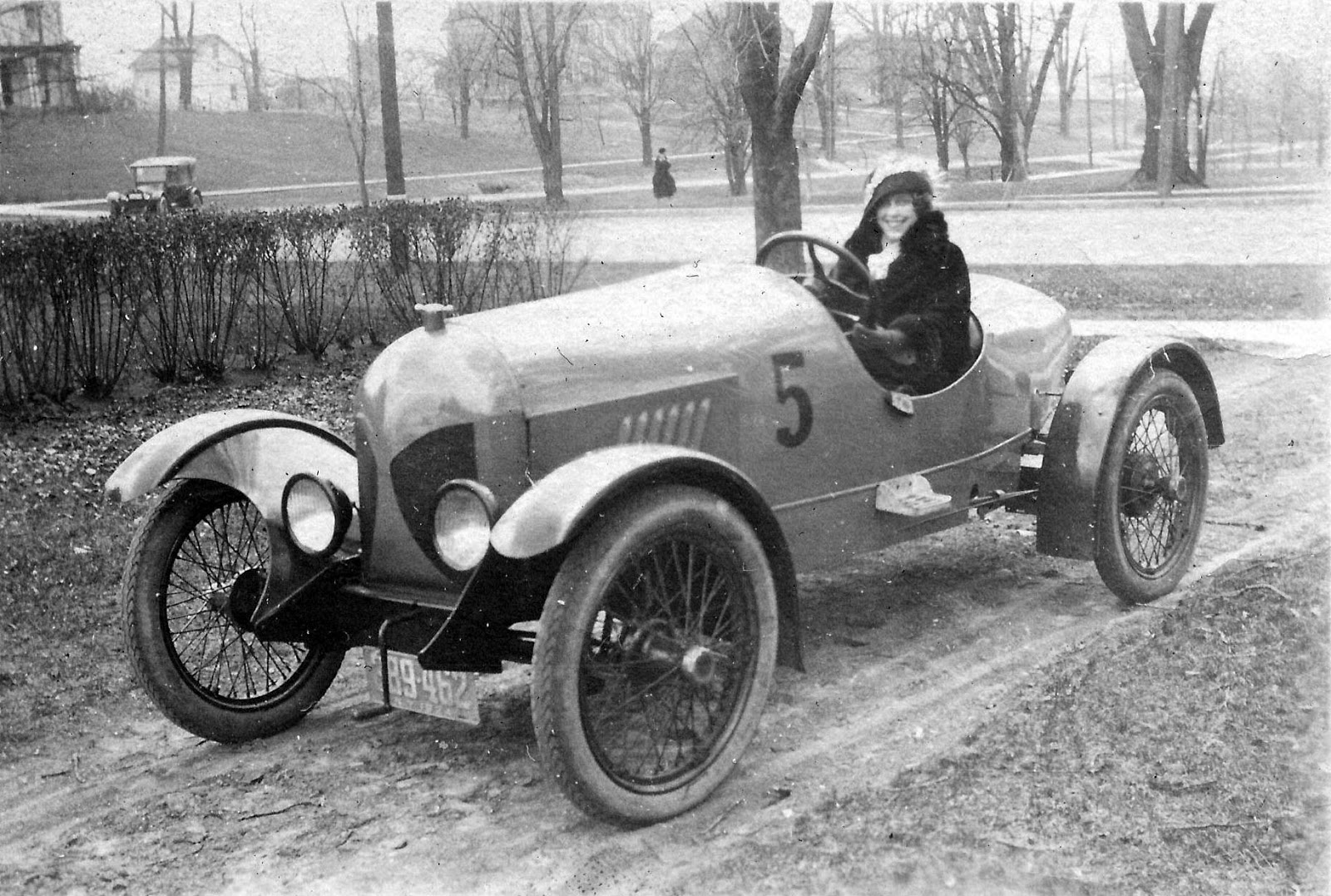
This is a picture of my great-grandmother sitting in an unknown race car of sorts.  I have done lots of work, but established little.  It appears to be a handmade racer, judging by the fact that it has BMW front fenders, but a strange grille and no badges.  The grille seems to have been cut out from metal, again seemingly handmade.  I can tell you that the license plate is a New York plate, dated 1924.  I'd appreciate it if anybody could tell me anything more about this car.
Thanks.

Friday, August 2, 2013

WKA Road Racing at Virginia International Raceway

This past weekend was the second to last WKA Road Racing event, taking place at VIRginia International Raceway, in Danville, Virginia.
My first event was the Junior Sprint Lite race on Saturday.  The start to the race went poorly, and I set off 30 seconds behind the competition.  I worked my way through the field, and by the second to last lap I was 15 seconds behind first place.  Unfortunately for me, I was not able to catch up, and i finished second 11 seconds behind.  However, my best lap time was a 2:49.3, a full three seconds faster than the first place finisher.
Because the starts have been an area that could use improvements, I worked on keeping the engine running, at using the carburetor needle to regulate the flow of fuel into the engine.  This helped profoundly in Sunday's race.
I started well, coming into the first corner in second place.  I quickly overtook for first, and stayed there until the second to last lap.  The second place went by coming through the uphill esses, and as we went into the famed Oak Tree Turn, i went to the inside.  He went wide and over the rumble strips, allowing me to go by.  On the last lap, we went side-by-side through the esses and into Oak Tree.  I again edged him out through Oak Tree, maintaining the lead into the Roller-Coaster.  He went inside, I held him off through the last turn.  I came onto the main straight in the lead, and eventually won by 0.06 seconds, or about half a kart length.
The championship will be decided in early September at Summit Point Raceway in West Virginia.